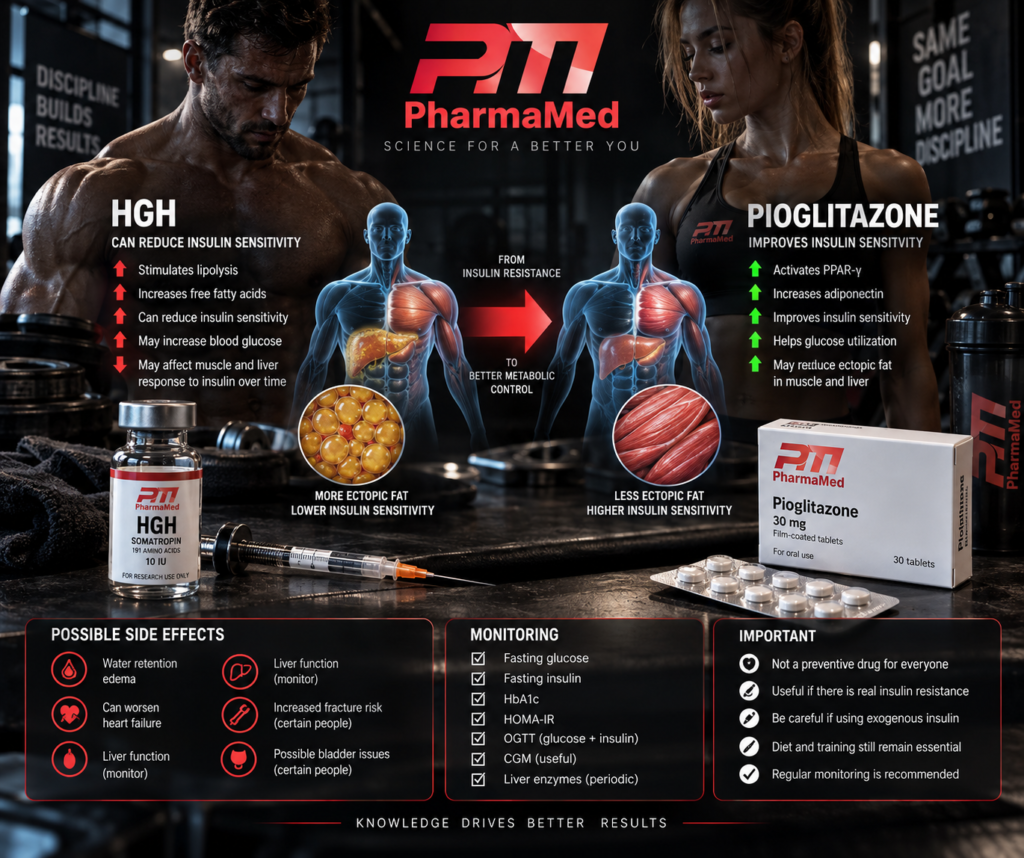
HGH has many benefits, but one of the important things to understand is that, over time, it can reduce insulin sensitivity. Put more simply, the body starts responding less effectively to insulin, and glucose is no longer used as efficiently by the muscles and liver. Because of this, blood glucose can start to rise, along with the amount of insulin produced by the body.
This is where pioglitazone becomes relevant.
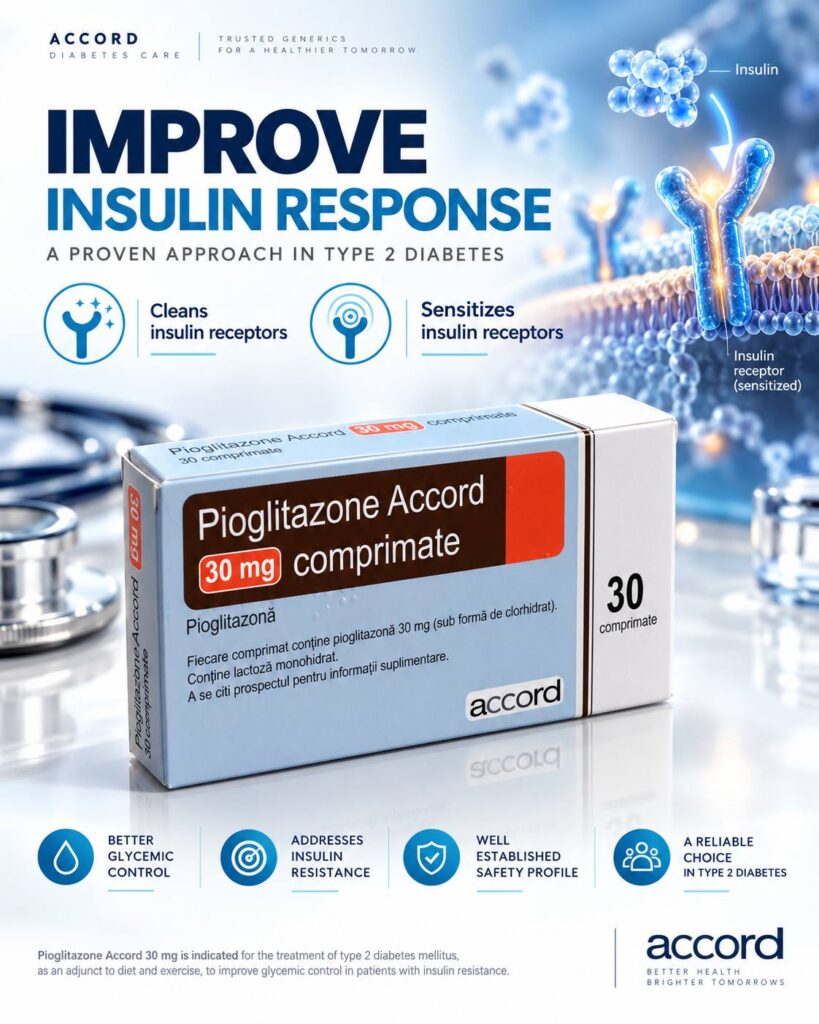
Pioglitazone works practically in the opposite direction. It improves insulin sensitivity, meaning it helps the body respond better to the insulin it already has. It acts through PPAR-γ receptors and also influences adiponectin and the way the body manages and stores fat.
In short, the idea is very simple:
HGH → may reduce insulin sensitivity → blood glucose may increase.
Pioglitazone → increases insulin sensitivity → the body uses insulin more efficiently.
However, there is one very important point to understand here. If a person is also using exogenous insulin, pioglitazone can make the same amount of insulin have a stronger effect. In practice, if insulin sensitivity improves, a dose of insulin that was previously tolerated may become too high and hypoglycemia can occur. This is why the combination with insulin requires much more caution.
Pioglitazone is not a perfect medication, however, and it also has disadvantages. One of the best-known is water retention. Edema can occur, especially in the legs, and there may also be an increase in body weight. If it is combined with insulin, fluid retention can become even more pronounced.
It is also not suitable for people with heart failure or a history of heart failure, because fluid retention can worsen the condition. There are other things that need to be monitored as well, such as liver function, fracture risk in certain people, and certain bladder-related problems.
In my opinion, it does not make sense to use pioglitazone preventively just because you are using HGH. First, you should see whether there is actually a problem with insulin sensitivity.
The simplest tests are fasting blood glucose, fasting insulin, and HbA1c. HOMA-IR can also be calculated from fasting glucose and insulin and can give an indication of insulin resistance. For a more complete assessment, an oral glucose tolerance test with both glucose and insulin measurements can also be done. A CGM sensor can also be very useful because it shows directly how blood glucose responds throughout the day and after carbohydrate-containing meals.
Pioglitazone is also different from metformin. Metformin works largely by reducing glucose production in the liver. Pioglitazone acts more directly on tissue insulin sensitivity. This is why it can be very effective in certain situations, but it also comes with the disadvantage of water retention and weight gain.
The main idea is that pioglitazone should not be seen simply as a “blood sugar medication.” It is primarily a medication that can improve insulin sensitivity. And in the case of someone using HGH, this only becomes relevant if blood tests actually show that insulin sensitivity is starting to deteriorate.